

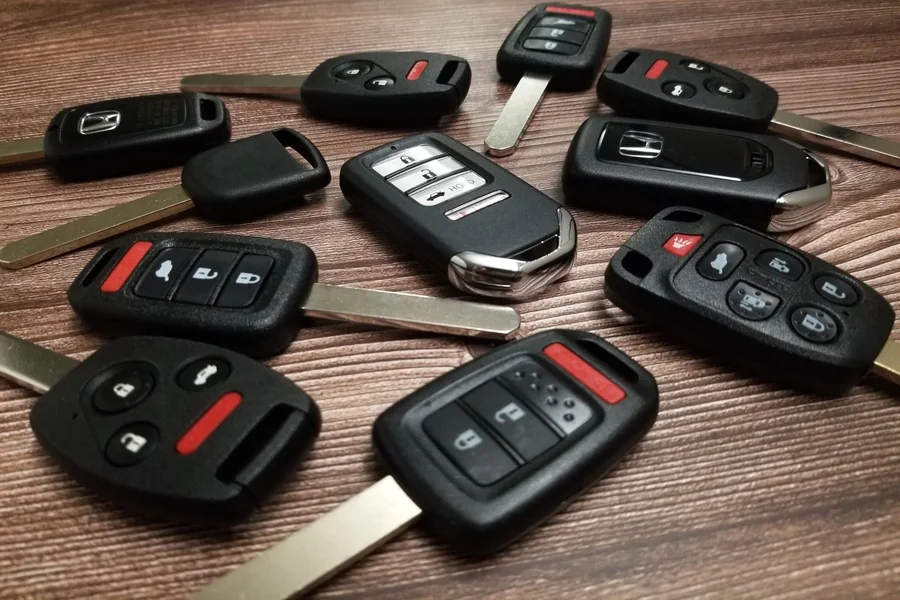
The latest-generation vehicles use smart keys or proximity key fobs rather than traditional metal keys for keyless entry and push-button ignition. You do not need to insert a key into the door to unlock it or into the ignition to start the vehicle, as the smart key system wirelessly communicates with the vehicle while in your pocket or purse. Automotive locksmiths have expanded their disciplines in these cutting-edge fields, from programming new smart fobs to troubleshooting when the technology does not perform as expected
What Makes a Key Smart?
A key is considered smart when it functions as a proximity or keyless-entry fob containing a microcomputer chip and an antenna. When you approach a vehicle, the vehicle’s sensors detect the fob presence. Upon touching the door handle, the system verifies proximity and unlocks the door. Inside the vehicle, pressing the push-button ignition confirms the authorized fob is present. This bilateral communication between fob and car delivers added convenience and enhanced security
Using Smart Key Technology
Keyless convenience: doors unlock with a touch and the engine starts with a button when the fob is with you
Increased security: encryption in the smart key’s electronic communication makes unauthorized access difficult, as each fob codes itself uniquely to its vehicle
Remote functions: smart fobs can lock or unlock doors, open the trunk, sound a panic alarm or, on equipped vehicles, enable remote start from a distance
Getting a Replacement for a Lost or Damaged Smart Key
If your smart key is lost or broken, an automotive locksmith can supply and program a replacement fob. Although a smart key costs more than a traditional key due to its advanced electronics, locksmith fees are typically lower than dealership charges. The locksmith will program the new fob so your vehicle recognizes it as authorized, remove the lost fob’s data from the car’s memory, and restore access to all vehicle features
Common Issues with Smart Key Troubleshooting
Battery failure: a dead coin-cell battery prevents the car from detecting the fob; replacing the battery usually resolves the issue (most vehicles still start if you hold the fob near the start button or steering column even with a dead battery)
Synchronization errors: changing the fob battery or signal interference can stop the vehicle from recognizing the fob; a locksmith can resynchronize or reprogram the fob for correct communication
Physical damage: water exposure or impact can render a fob inoperative; in such cases the locksmith provides and programs a replacement and safely disposes of the damaged unit
A professional automotive locksmith equipped with the right tools can diagnose and remedy any smart key problem, from programming new fobs to resetting existing ones, ensuring your vehicle’s security and convenience remain uncompromised
