

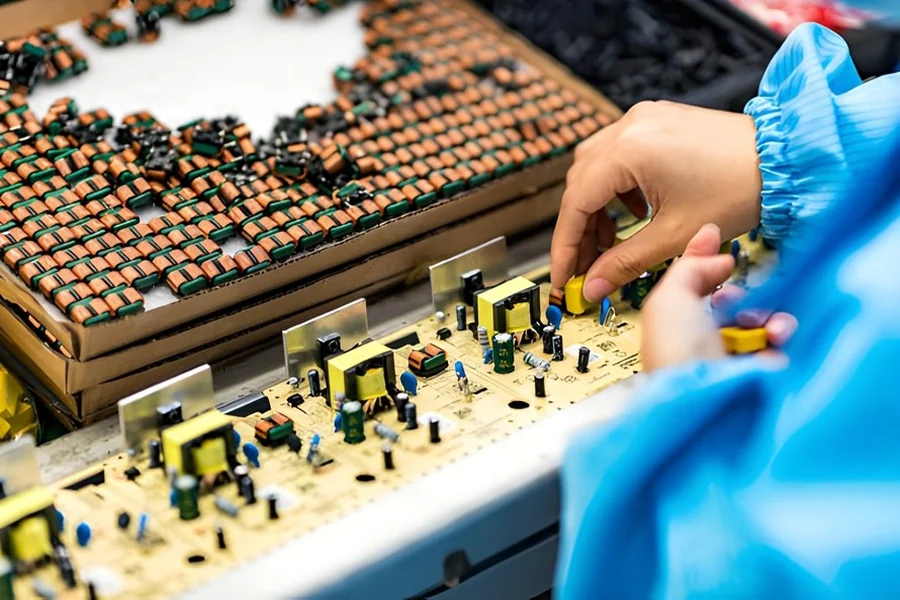
Mixed technology PCB assembly refers to the process in which both Surface Mount Technology (SMT) components and Through-Hole Technology (THT) components are mounted on the same printed circuit board. As electronics continue to evolve, many devices require a combination of miniature, lightweight SMD components and mechanically strong through-hole parts. Mixed technology PCB assembly makes this possible by blending the strengths of both methods to create durable, high-performing electronic products.
This hybrid approach is widely used across consumer electronics, automotive systems, industrial controls, telecommunications equipment, aerospace systems, and medical devices. Each industry demands reliability, high performance, and long-term durability, making mixed technology assembly the ideal solution for modern product design.
Why Mixed Technology PCB Assembly Is Important
Mixed technology PCB assembly is essential because not all components fit one assembly method. Some electronic components must be surface-mounted for speed and space efficiency, while others must be inserted through-hole to withstand heavy mechanical stress, heat, or vibration.
Balancing Performance, Strength, and Density
Modern electronic designs are more compact than ever, requiring high component density. SMT allows engineers to mount components on both sides of the PCB, supporting miniaturization. However, components such as transformers, connectors, high-power resistors, relays, and large capacitors still require strong mechanical support, which is best achieved through-hole.
Mixed technology PCB assembly ensures the perfect balance: SMDs handle signal processing, fast switching, and compact layouts, while THT components provide structural integrity and reliability.
Supporting Complex and Advanced Designs
Products like industrial power supplies, automotive ECUs, aerospace controllers, and medical imaging systems often have complex designs that rely on both large and small components. Mixed technology assembly allows engineers to design freely without being restricted by a single assembly technique. This flexibility results in better-performing circuits and higher durability.
Enhancing Durability for Harsh Environments
Electronics used in high-vibration, high-temperature, or mission-critical applications depend heavily on through-hole components. Mixed technology PCB assembly ensures that sensitive SMT components function efficiently while heavy-duty THT components withstand environmental stress, giving the final product a longer lifespan and higher reliability.
Key Steps in Mixed Technology PCB Assembly
SMT Assembly Comes First
The mixed assembly process usually begins with surface-mount components. Solder paste is applied using stencil printing, and automated pick-and-place machines accurately position thousands of SMD components per hour. The PCB then goes through reflow soldering, which melts the solder paste and creates strong electrical connections.
Since reflow heat can damage through-hole components, SMT is completed first. This ensures proper soldering without affecting larger parts that cannot withstand high temperatures.
Through-Hole Assembly Follows
Once SMT is completed, through-hole components are added. These components are either inserted manually by skilled technicians or by automated insertion machines, depending on complexity and production volume. After placement, the board goes through wave soldering or selective soldering to complete the electrical and mechanical joints.
Selective soldering is often used for sensitive boards that cannot be exposed to large waves of molten solder. This ensures precision without damaging delicate SMT components already attached.
Inspection and Quality Control
Mixed technology PCB assembly requires rigorous inspection because the combination of SMT and THT introduces additional complexity. Manufacturers use:
- Automated optical inspection (AOI)
- X-ray inspection (especially for BGAs)
- Functional circuit testing (FCT)
- In-circuit testing (ICT)
These systems confirm that both SMT and THT assemblies meet precise standards, ensuring the PCB performs perfectly under real-world conditions.
Cleaning, Coating, and Final Assembly
After soldering and testing, the PCB is cleaned to remove flux residues. For applications in medical, aerospace, automotive, or outdoor environments, conformal coating is applied to protect against moisture, dust, chemicals, and vibration. The board is then prepared for box build assembly or integrated directly into the final product.
Applications of Mixed Technology PCB Assembly
Automotive Electronics
Modern vehicles rely on advanced control units, lighting systems, battery management systems, and safety electronics that require both small SMT chips and rugged THT components. Mixed assembly supports long-term performance and heat resistance.
Industrial and Power Electronics
Power converters, motor controllers, automation systems, and industrial instrumentation demand high reliability. These devices involve heavy-duty connectors and transformers that require THT, along with microcontrollers and signal-processing ICs best mounted using SMT.
Telecommunications and Networking
Routers, base stations, signal amplifiers, IoT devices, and network equipment use mixed technology assembly due to their need for high frequency performance combined with structural strength.
Aerospace and Defense
Mission-critical systems require extremely high reliability. Mixed technology PCB assembly ensures flawless operation under vibration, shock, and extreme temperatures.
Benefits of Choosing Professional Mixed Technology PCB Assembly
A skilled assembly partner ensures smooth integration of SMT and THT processes, reducing defects and improving overall production quality. Professional manufacturers use advanced machinery, strict process control, optimized thermal profiles, and experienced engineers who understand the unique challenges of hybrid assembly. This results in better durability, improved signal performance, and long-term product stability.
Final Thoughts and CTA
Mixed technology PCB assembly enables manufacturers to design sophisticated, powerful, and long-lasting electronic products by combining the advantages of SMT and THT in a single board. As industries demand higher performance and greater reliability, mixed assembly becomes an essential solution that supports complex engineering requirements. If you want stable production, precision engineering, and long-term product reliability, working with experts experienced in Chinese PCBA can help you achieve the highest quality mixed technology assembly for any application.
